there seems to be such a negative light cast upon the famous robinson crusoe and yet, i'm starting to believe that it is done for a reason. throughout the class and online discussions, everyone appears to agree that rc is nothing but an unchangeable jerk. his desire for control, lack of enthusiam for anything (including his family, wife and her death *which he only mentioned in one sentence throughout the entire novel*) and total disregard for anyone or anything unless he needs them is amazing. i don't know how people could idolize him as a hero as he wasn't even a very succesful seaman. that, however, is beside the point.
“I turn’d to the boy who they called Xury, and said to him, Xury, if you will be faithful to me I’ll make you a great man, but if you will not stroke your face to be true to me, that is, swear by Mohomet and his father’s beard, I must throw you in to the sea too…”
poor xury...poor...poor xury. you have to feel bad for someone who becomes one of rc's total slaves. crusoe had no problem in drowning this young boy. much like the episode with the lion, life is of no true meaning to crusoe unless it is his own. throughout the entire novel, crusoe rarely takes heed of anything else that does not serve him. even God is put secondhand and called upon when needed,
“Lord look upon me, Lord pity me, Lord have mercy upon me…”
sick and on his deathbed, crusoe looks to the lord for help. i believe crusoe felt so out of control that he sought a greater power to assist him. i noted that, throughout the novel, crusoe rarely lost any control of anything and when he did...he needed the lord. he called upon him when he needed something but not to say 'hey, thanks' or anything else to that matter.
“O drug!” said I aloud, “what art thou good for? Thou art not worth to me, no, not the taking off of the ground; one of those knives is worth all this heap; I have no manner of use for thee; e’en remain where thou art and go to the bottom as a creature whose life is not worth saving.” However, upon second thoughts, I took it away. . . ."
although slightly amusing, this quote shows one of rc's great struggles - money. the drug, or gold, as he is exclaiming is nothing but a social ladder and yet, in his state, it matters nothing to him. yet, just as quickly as rc decides it is worthless, he immediately jumps at it again to store it away. money, wealth and power are three very important aspects of rc. his voyages, slaveships, and overall life is a mission to make money.
"I consulted neither Father or Mother any more, nor so much as sent them Word of it; but leaving them to hear of it as they might, without asking God's Blessing, or my Father's..."
his father offered him the world if he would stay and yet, rc took off...without even saying goodbye. his family was of no value, nor was his wife. nothing mattered to rc but himself and that truly bothered me. although he became attached to his goat and friday, rc never put anything but himself on top.
"My island was now peopled, and I thought myself very rich in subjects; and it was a merry reflection, which I frequently made, how like a king I looked. First of all, the whole country was my own mere property, Baso that I had an undoubted right of dominion. Secondly, my people were perfectly subjected. I was absolute lord and lawgiver, they all owed their lives to me, and were ready to lay down their lives, if there had been occasion of it, for me."
so here is this man, on an island, experiencing a major ego-trip. what a ride it must have been for good ole rc! to stumble on to this island and declare it his own! "...how like a king I looked," said rc....right. i don't know how much i should elaborate on this quote as it is pretty much self-explanatory. rc thought these natives loved him, he loved his kingdom and all was well. again, the references to rc's power-trips and love for control are oozing in this quote.
"...I shar'd the Island into Parts with 'em, reserv'd to myself the Property of the Whole, but gave them such Parts respectively as they agreed on..."
this island serves as a great foundation for who rc was as a whole. this object became one of great value to rc as he were a great king and it was his kingdom. even after he left and there were new inhabitants he still depicts himself as king. after all that he went through on that island, you would think he would want others to skip it and yet, he forces others to stay. way to go...jerk
"O, master"
Priceless. Definitely one of my favorite things to pull for this blog. I wish I could train people to say this and yet, I would become just like this man. rc teaches friday to call him by the name of 'master' before teaching him anything else. although rc does show affection and favoritism towards friday, their relationship was definitely slave owner and slave.
"loaded my gun again, and by and by I saw a great fowl like a hawk sit upon a tree within shot; so to let Friday understand a little what I would do, I call’d him to me again, pointed at the fowl which was indeed a parrot, and to my gun, and to the ground under the parrot, to let him see I would make it fall, I made him understand that I would shoot and kill that bird…”
whether it is the lion, the cats, the bear or the birds...nothing is safe. the last line of this quote is most appalling to me. i could never, under any circumstances other than life or death, kill another being. maybe it is just me, or the time period in which i live, but i see 'animal cruelty' written all over this. i felt this quote was about rc showing friday he was almighty and powerful. he is training friday to take the lives of things that, to rc, do not matter.
again, what a jerk.
through these quotes and a general understanding of the novel, i feel pretty confident in defending my original thesis...rc does not change. although he might make momentary adjustments to suit the situation, he is nothing but an egotistical jerk. his head is incredibly high in the air and there is nothing equal to him. sometimes i even wonder if rc thinks he is equal to god. if anything, rc definitely believes he is royalty.
Thursday, March 20, 2008

Wednesday, March 5, 2008
aye matey! shipwrecks and survivals of 17th and 18th centuries

shipwrecks - survivals
the sunken ships and lost souls of the 17th and 18th centuries
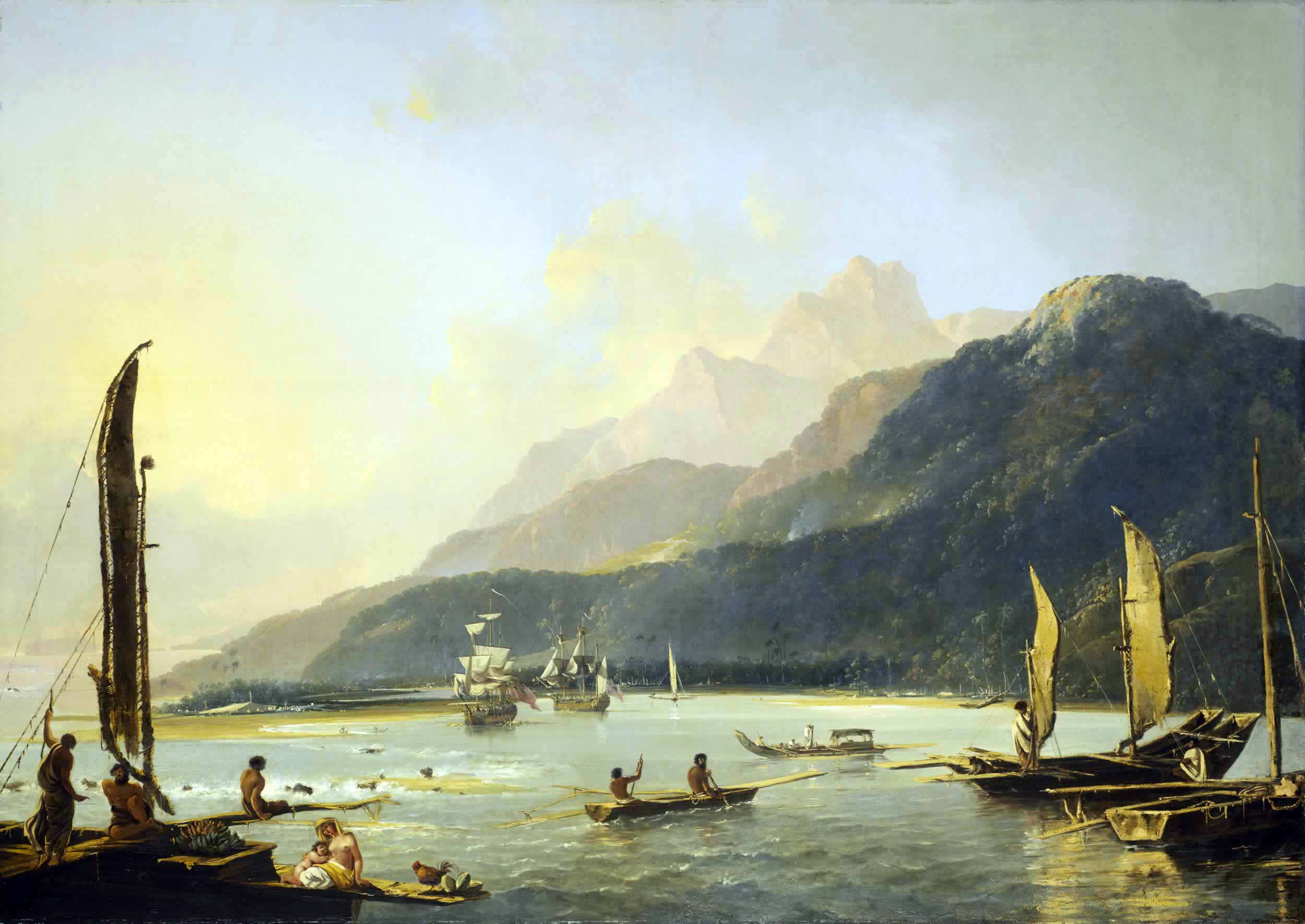
there are so many ships that could be described and explored but i found two that were truly fascinating to me. they are:

there are so many ships that could be described and explored but i found two that were truly fascinating to me. they are:
the vasa
whydah
the royal ship: the vasa
in the 1620's -- Sweden's naval forces were in the process of modernization. by building a greater number of heavily armed warships, sweden become more efficient and slightly more aggressive. their warships, were used for troop transportation, blockage operations as well as to win and protect baltic ports.
the vasa, much like her sister-ships, was heavily armed and was able to destroy enemy ships with ease. in 1625 - the crown signed a contract to build four warships -- two larger and two smaller. the vasa, who was one of the larger ships, was produced alongside the Tre Kronor (Three Crowns). The Vasa was named after the ruling Vasa dynasty. actually, she was named after the heraldic emblem of the Vasa dynasty. the emblem was of a sheath of corn.
along with her sister ship, she belonged to a category called Royal Ship (in swedish: Regalskepp). She was one of the largest ships in the navy. the vasa was built from oka and approximately 1,000 okas were used to build the ship. she was actually launched the minute she could float -- without having been completely finished. although amusing, it made sense as she would have been very difficult to launch as such a large boat later on.
the captain of the vasa was Söfring Hansson and he was accompanied by two sub-lieutenants. there were a large number of lesser officers, two mates and two bombardier as well as two skippers. there were about 90 sailors and 20 special officers as well as one cook.
the capsizing of the vasa:
in august 1628 - the vasa went to take her maiden voyage. she set sail from the royal castle around 3 pm heading eastward toward the archipelago of stochholm. she fired a "swedish charge", which is a two-gun salute as they lost sight of the docking area. but then a gust of wind from the south caused her to heel and the wind began to increase as they sailed along. all of a sudden, large gusts of wind supposedly made her heel alarmingly to port and water began to pour through the lower gunports. despite the efforts of the crew to save her, the vasa sank in desperation to a depth of 30 meters.
the was clear back then and, if someone sailed by, you could actually catch a glimpse of the vasa as the lay on the seabed. she sank just off the island of becholmen. fortunately, the vasa carried a crew of 200 and only 50 of them drowned. but, because of the disaster, everyone considered it a bad omen for their nation.
it was not until 1961 that the vasa was drawn up from her watery grave. thousands of interesting tid bits were found inside and around the magnificent ship. in 1990, the reconstruction and preservation work were completed and the vasa was given a home the vasa museum on the island of Djurgården. today, the vasa is the most well-preserved 17th century ship in the world.
a complete story of The Vasa can be found here:
the whydah

alright...this one was probably my favorite! i just thought it was such an interesting story and...well...i love pirates ;)
argh matey! the whydah was the flagship of the pirate "Black Sam" Bellamy. the ship sailed for only a year as a pirate ship until a horrific storm off the coast of Massachusetts sank the vessel. yet, before being transformed in to a glorious pirate ship, it had sailed two voyages as a merchant galley through the rouse of the triangular trade. its past was in transporting english goods to africa, slaves from africa to the new world and then back to england.
she was america's only known pirate ship and, in april 1717, her captain and 143 others died with her. truly, the whydah is more than just a shipwrecked tragedy - it is a love story with a rag-to-riches twist that turned horribly wrong.
the captain - sam bellamy was in love with a maria hallet of eastham, massachusetts. her parents, who did approve and like sam, were nervous of his income and felt that a poor sailor could not provide for their daughter. in response to this, bellamy and several friends took off looking for fortune and a future.
along with his friend palgrave williams, bellamy started out as a ordinary treasure hunter -- looking for shipwreckes. unfortunately, there was no luck in that business. but, instead of returning home with nothing, the determined lover became a pirate. in just a year of raiding, bellamy and his crew plundered more than 50 ships on the caribbean and atlantic. they were considered 'robin hood's men' and were remarkably democratic aboard the ship.
then came the whydah. in feb. of 1717, bellamy captured the beautiful three-masted english slave ship. with her came gold and silver worth more than 20,000 pounds sterling. for these men, who might have earned two pounds a month, this was the jackpot.
bellamy, being modest, decided that this was enough and turned the ship around. yet, as they turned for home (and maria) - tragedy struck on april 26, 1717. a fierce storm sank the ship, the captain and all but 2 of the 145 crew.
the story of the whydah:
http://www.nationalgeographic.com/explorer/whydah/more.html
http://www.nationalgeographic.com/whydah/main.html

Monday, March 3, 2008
the lady of death
Her lips were red, her looks were free,
Her locks were yellow as gold:
Her skin was as white as leprosy,
The Night-mare LIFE-IN-DEATH was she,
Who thicks man's blood with cold.
The Night-mare LIFE-IN-DEATH was she,
Who thicks man's blood with cold.
A True Night-Mare
Samuel Taylor Coleridge (1772-1834)
The Rime of the Ancient Mariner (text of 1834)
The Rime of the Ancient Mariner (text of 1834)
-------------------------------------------------------------------------------------
I brought this point up on the discussion board the other day because I found it to be incredibly interesting. In Coleridge's poem, I was intrigued by the fact that death was represented by a woman. I was trying to think of any other plays or any peices of literature in which death was in the form of a female. Truly, I could not think of any.
I have always considered death as a more masculine figure. Consider the devil, who is male, and also the grim-reaper who has a masculine connotation. I desperately tried racking my brain, and despite everything I could think of, I have no recollection of a woman ever being death. I thought it was unique that Coleridge used a female to be the symbol of death.
But what does that mean? Is it simply coincidence or did Coleridge do this on purpose?
Once I went back and read the poem again, I picked up on several themes. I realized there was a need for redemption and appreciation of God's creatures. Through all of it, I could not find any reason for death to be a woman. Maybe Coleridge had a sexist view point of women? Or, maybe, to battle God (who is thought of as male) one would need a woman to oppose him (much like Eve).
I do remember, however, that in ancient mythology women were often associated with evil, power, and manipulation. Consider Medusa, or other such lady monsters that plagued the sea and created nightmares for sailors for centuries. (http://www.paleothea.com/LadyMonsters.html)
Also, I remember in the Pirates of the Carribbean, that the dress aboard the ship was considered bad luck. For some sailors, women were the ultimate curse when they were on board. This website (http://pacificoffshorerigging.com/nautical_superstitions.htm) points out several nautical supersitions and one of them is women being on board: they make the sea angry. Yet, naked women on board -- all good. Also, it taps in to the killing of an albatross and a gull - which contain the souls of sailors lost at sea.
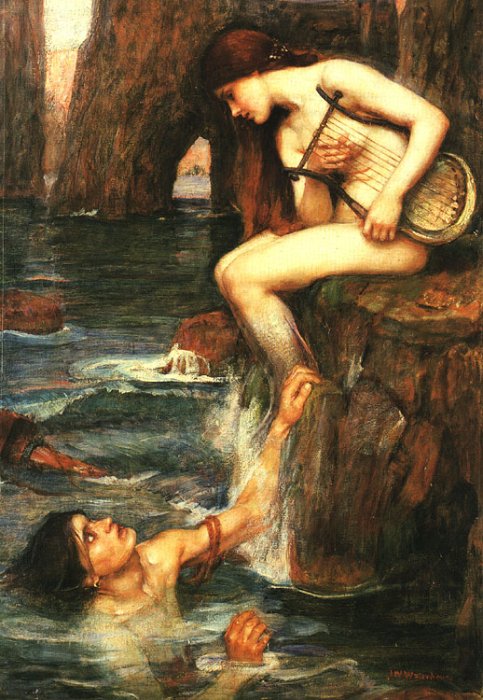
Look at the sirens and the myth that women on board attracted sea monsters, dangerous seas and death. Maybe Coleridge took these historical ideas in to place when he wrote the poem.
Or...he could have just been sexists.
I just find it so interesting as to how history applies roles to women. In some myths, they are symbols of fertililty, forgiveness and creation and yet in others -- they are wicked, sex-driven, manipulators. I believe Coleridge swayed towards being a bit more sexist and also a bit supersitious.

Subscribe to:
Posts (Atom)
